

- Inicio
- / Servicios
- / La ciudad funciona
- / Mantenimiento del espacio público
- / Gestión integral del agua
- / Saneamiento
Saneamiento
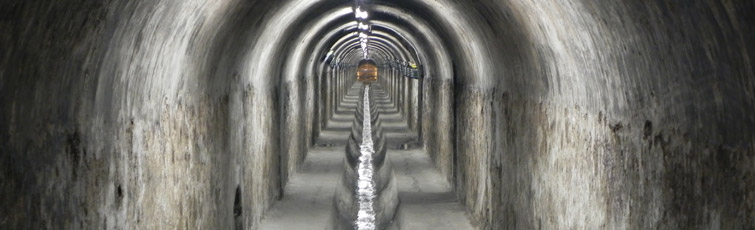
El sistema de alcantarillado de Barcelona da respuesta a la necesidad de protección medioambiental de los medios receptores: los ríos Llobregat y Besós y el mar Mediterráneo. El objetivo es reducir y controlar los vertidos del alcantarillado al medio receptor. Las aguas utilizadas son conducidas por la red de alcantarillado hasta las plantas depuradoras, donde antes de verterse se tratan.
Historia
Desde sus orígenes, Barcelona dispone de sistemas de alcantarillado que han ido evolucionando al ritmo de la ciudad. Las primeras construcciones, descubiertas por Josep Antoni Brusi, se remontan a la época romana, pero el actual alcantarillado es, mayoritariamente, fruto del trabajo de ingeniería diseñado por los ilustres ingenieros de caminos, canales y puertos Pere García Faria y, posteriormente, Albert Vilalta.
El Plan de García Faria (1886)
El Plan García Faria marca un antes y un después en la historia del alcantarillado de Barcelona y, por tanto, en la calidad de vida de sus habitantes. En la introducción, Pere García Faria reconoce que su propuesta de reforma no era atractiva, pero recuerda que su acción no tardó en producir frutos excelentes. El proyecto no fue plenamente aplicado en la práctica, pero supuso un precedente importantísimo.
El origen del plan se encuentra en 1884, cuando el alcalde de Barcelona, Joan Coll i Pujol, crea una comisión técnica para reformar el alcantarillado. El propio García Faria expone en 1885 las bases de su proyecto, que no son aprobadas hasta un año más tarde. Aunque el plan es extenso y técnicamente complejo, se incluyen algunos puntos básicos para el posterior desarrollo de la red de alcantarillado:
- Divide Barcelona en tres grandes cuencas, subdivididas en veintitrés más. Se busca un equilibrio entre los gastos iniciales y los derivados de su conservación.
- El sistema de funcionamiento será el de gravedad continuada. El corte de la sección transversal será de un mínimo de 1,70 m de alto y de 80 cm de ancho.
- En las zonas de menor caudal y velocidad se instalarán cámaras de descarga para garantizar la continuidad del flujo.
- Las cámaras deberán estar intercomunicadas por galerías, obligando a los propietarios a colocar sifones hidráulicos obturadores (mecanismo de apertura-cierre).
- La ventilación de las alcantarillas se realizará a través de los tubos de bajada de las aguas pluviales de los edificios.
- Se crearán brigadas especiales de conservación y limpieza.
Plan General de Alcantarillado de 1954
En 1952 se redactan las directrices que, dos años después, permitirían elaborar el Plan General de Saneamiento y Alcantarillado de Barcelona. Este plan indica las deficiencias más destacadas del subsuelo barcelonés, como la falta de capacidad para absorber todo el caudal o la concentración de las salidas al mar sólo a tres puntos (emisario de Sants, de la riera de Horta y del Bogatell). También recalca el problema de los bajos pendientes en las alcantarillas de la parte baja de la ciudad.
El Plan Vilalta (1968)
Barcelona había sufrido un fuerte desarrollo urbano, absorbiendo, con su área de influencia, una gran oleada inmigratoria. La urbanización incontrolada de años de urbanismo que consistió en recalificar sistemáticamente terrenos que en el Plan General llevaban las etiquetas de públicos volviéndolos edificables, llevó una intensiva densificación en la corona exterior y en el Eixample.
Por otra parte, en estos años se produjo un cambio de actitud respecto al mar. Si antes la ciudad le daba la espalda y se entendía que las mismas marinas eran fuentes de enfermedades, en la década de los sesenta los ciudadanos comienzan a interesarse por el litoral, disfrutando de ella, en la medida en que pueden, con gran entusiasmo.
El crecimiento de la ciudad, con el consiguiente aumento de la superficie impermeabilizada, llevó a la obsolescencia muchos colectores, que necesitaban reformas para poder absorber los nuevos caudales en tiempo de avenida. Además, la creciente importancia económica de las zonas inundables hace enfocar la cuestión de intentar evitar su anegamiento.
El Plan de Alcantarillado dirigido por el ingeniero de caminos Albert Vilalta entre los años 1967 y 1969, y redactado por el Servicio de Alcantarillado del Ayuntamiento de Barcelona, quería responder a estos problemas.
Uno de los objetivos del plan fue reciclar estas aguas para reutilizarlas para regadíos y usos industriales, poniendo así remedio al déficit hídrico de Barcelona y su comarca. Otro objetivo no menos importante fue el de restituir algunas cuencas hacia sus zonas de desagüe natural, para descargar en lo posible la salida del Bogatell. Estaba previsto cortar las salidas directas de aguas residuales en las playas y tratarlas en plantas depuradoras, con el fin de garantizar la calidad de las aguas marinas para su uso recreativo por parte de los ciudadanos.
Entre las realizaciones más notables de este plan se deben destacar las depuradoras del Besòs y del Bogatell, esta última demolida recientemente. La realización del Plan Vilalta quedó incompleta debido a la falta de inversión suficiente, pero sus propuestas básicas se transmitieron cumplidamente a los planes que finalmente se han ejecutado. El Plan Vilalta supone el primer intento serio de planificación y drenaje del saneamiento de la ciudad desde el Proyecto de García Faria.
El Plan Especial de Alcantarillado de Barcelona (1988)
La evolución de la ciudad de Barcelona exigió un cambio de los planes de alcantarillado existentes. La Barcelona olímpica, los planes de saneamiento y, en definitiva, la consolidación de la urbanización, llevaron a la elaboración del Plan Especial de Alcantarillado de Barcelona (PEC). El plan incluyó un análisis del funcionamiento global de la red para identificar las zonas inundables y analizar sus causas. En el estudio se incluyeron también los municipios del área metropolitana, como L'Hospitalet, Esplugues y una parte de Sant Adrià de Besòs.
Una de las innovaciones más destacadas de este plan especial es el uso de métodos informáticos, lo que permite simular el funcionamiento de la red de alcantarillado según la intensidad pluvial e identificar así los puntos problemáticos.
Otro de los elementos clave de este plan es que, por primera vez, se empieza a estudiar la posibilidad, hoy ya hecha realidad, de instalar un sistema de control en tiempo real de la red de alcantarillado. También se plantea la necesidad de aumentar el número de colectores y de depurar el agua al máximo en los casos de grandes avenidas.
El Plan Especial de Alcantarillado de Barcelona (1997)
El Plan Especial de Alcantarillado de Barcelona, PECLAB '97, es el documento que planifica el desarrollo del alcantarillado en el ámbito hidrológico de la ciudad para cumplir los objetivos asignados al alcantarillado (recoger y transportar las aguas residuales hasta las estaciones depuradoras, evitar inundaciones a causa de las aguas pluviales y reducir el impacto ambiental de los vertidos del alcantarillado en tiempo de lluvia al medio receptor).
La extensión y modificación de la red de acuerdo con este planeamiento ha supuesto la ejecución de obras de un valor superior a los 140 millones de euros desde el año 1997, incluyendo la ejecución de depósitos de retención y anticontaminación (Escola Industrial, Zona Universitaria, Bori y Fontestà, Doctors Dolsa, Parque Central de Nou Barris, Joan Miró y Taulat), con un volumen total de 440.000 m³ de capacidad y numerosos colectores, entre los que cabe destacar los de la zona de las calles Enamorats-Aragó. Este plan continuará ejecutándose durante los próximos años, estando prevista una inversión de más de 45 millones de euros en el periodo 2004-2007.
La ejecución de las diferentes fases del trabajo, desde la planificación hasta la ejecución de la obra, conlleva el uso de avanzadas herramientas de apoyo, sin las cuales el PECLAB no sería un documento de la calidad de la actual. Entre estas herramientas de apoyo cabe destacar el sistema de modelización (que permite conocer el comportamiento del agua en la red de alcantarillado), el sistema de información territorial (que permite conocer la configuración de la red) y el sistema de telecontrol (que permite operar el sistema).